King Mohammed VI of Morocco appointed Fatima Zahra El Mansouri as the country’s first female prime minister on Tuesday, September 29, 2026. The appointment, formalized at the Royal Palace in Rabat, follows the legislative elections held on September 23, in which El Mansouri’s party secured the largest share of seats in the House of Representatives.
The transition adheres to Morocco’s 2011 Constitution, which mandates that the King must select the prime minister from the political party that wins the most seats in parliamentary elections. El Mansouri’s Authenticity and Modernity Party (PAM) secured 97 out of 395 seats, positioning it as the leading force in a fragmented legislature.
El Mansouri, a lawyer by profession, previously served as the Minister of National Planning, Urban Planning, Housing, and Urban Policy. She also holds the high-profile role of Mayor of Marrakesh. With this appointment, she becomes the second woman to lead a government in the Arab world, following Tunisia’s Najla Bouden.
Election Outcomes and Coalition Challenges
While PAM emerged as the victor, the party fell significantly short of the 198 seats required for a functional majority. The new administration will likely need to negotiate a coalition with other major parties, including the National Rally of Independents (RNI), which won 66 seats, and the Istiqlal Party, which took 65.
The election results also saw a resurgence of the Islamist Justice and Development Party (PJD). After a devastating loss in 2021 that left them with only 13 seats, the PJD surged to 54 seats in this cycle, signaling a shift in the opposition landscape.
Despite the political shifts, the election was marked by a sharp decline in civic participation. National voter turnout was recorded at 38.08%, a significant drop from the 50.86% turnout seen in 2021 and the lowest level recorded since 2007. Analysts suggest this decline may reflect a growing disconnect between the electorate and the traditional political establishment.
The ‘World Cup Government’ Mandate
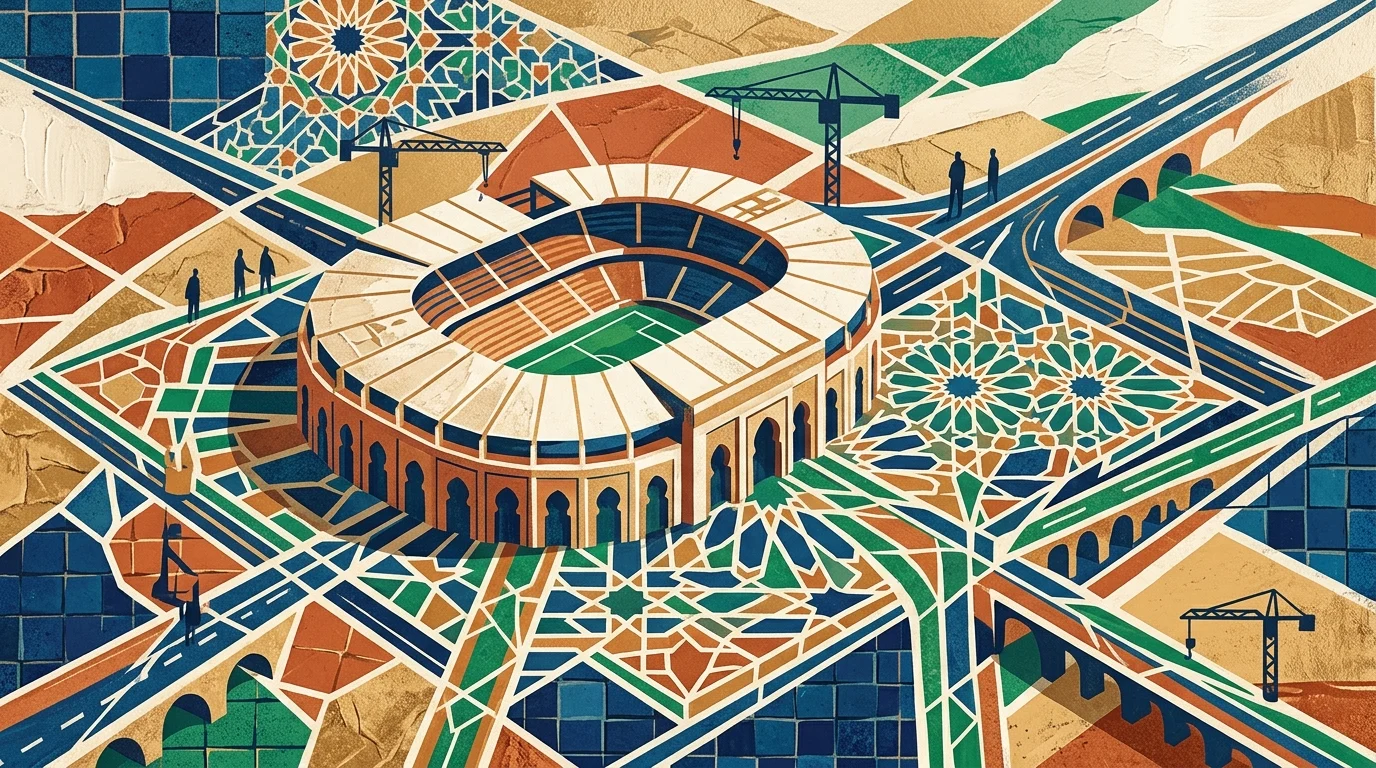
El Mansouri’s cabinet enters office with a specific and high-stakes mandate: preparing Morocco to co-host the 2030 FIFA World Cup alongside Spain and Portugal. Often referred to informally as the “World Cup Government,” the administration is expected to oversee a $20 billion infrastructure push. This includes massive investments in stadiums, high-speed rail networks, and tourism capacity intended to modernize the nation’s logistics and economy.
Beyond infrastructure, the incoming government faces pressing domestic challenges. Public discourse during the campaign was dominated by concerns regarding youth unemployment and migration. While the Prime Minister leads the government, the King retains constitutional control over strategic sectors, including foreign policy, defense, and religious affairs.
The formation of the full cabinet is expected to follow as El Mansouri begins formal negotiations with potential coalition partners to secure a working majority in the House of Representatives.